6 Practical Ways to Improve German Beyond the Intermediate Plateau
Stuck at B1-B2 German? These 6 practical methods force your brain to use German actively and break through the intermediate plateau.
Published February 14, 2026 · By Nuru HasanovLearning German feels exciting at first. You learn basic words, simple sentences, and suddenly you can understand signs, menus, and small conversations. But then something strange happens. You keep studying... and nothing changes.
If you are stuck at intermediate German (around B1-B2), you are not failing. You are experiencing something very common: the intermediate plateau.
Let's break down why this happens and what actually helps you improve German beyond this stage.
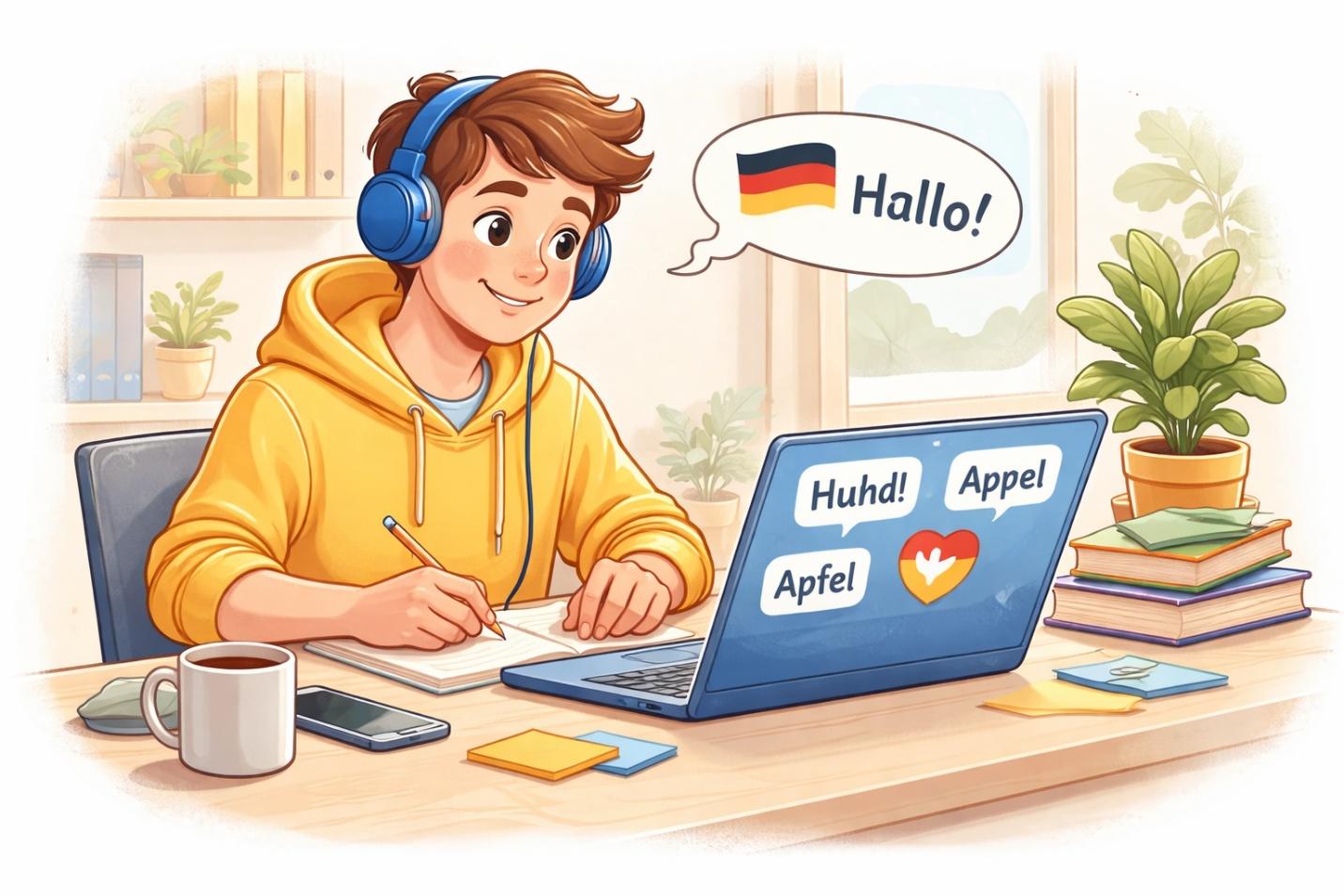
The real problem isn't grammar or vocabulary
Most intermediate learners already know a lot of German. They know hundreds or thousands of words. They understand grammar rules. They can read simple texts.
But knowing German is not the same as using German.
At this stage, many learners collect information but don't build skills. They recognize words but can't say them quickly. They understand slow audio but struggle with real conversations. This gap between knowing and doing is the main reason progress feels stuck.
Why common learning methods stop working
Textbooks, word lists, and passive listening are great for starters. But once sentences get long and native speech gets fast, these methods don't train your brain to react quickly.
German adds extra challenges: unusual word order, separable verbs that split, and long compound words that only make sense at the end of a sentence.
That means you need practice that trains your ears, mouth, and reaction time together.
German adds extra difficulty
German has a few features that make the plateau worse:
- Word order changes (the verb often comes late)
- Separable verbs that split apart
- Long compound words that take time to process
This means you often only understand a sentence at the very end. Passive study doesn't train your brain to handle this fast enough, only real use does.
6 practical ways to actually improve German
These methods come directly from real learners and language-learning research. They work because they force your brain to use German, not just study it.
1. Listen, then read, then listen again
Choose short German audio with a transcript.
- Listen once without reading
- Listen again while reading
- Listen a third time without the text
You'll be shocked how much more you understand by step three.
2. Speak every week, even if it feels uncomfortable
You don't need perfect sentences. You need practice.
Aim for:
- 2-3 short speaking sessions per week
- With a tutor, language partner, or AI conversation tool
Speaking builds fluency faster than any grammar exercise.
3. Copy native speakers (shadowing)
Play a short audio clip. Pause after each sentence. Repeat it out loud, copying the speed and rhythm.
This trains pronunciation, sentence flow, and confidence at the same time.
4. Stop learning single words, learn sentences
Instead of memorizing "words," save full sentences you hear or read.
Example:
Ich habe nicht damit gerechnet.
Sentences teach grammar, word order, and meaning together, the way your brain actually uses language.
5. Read easy German on purpose
Children's books, graded readers, or simple news articles are powerful tools.
If reading feels easy, that's good. Easy reading builds speed, confidence, and natural grammar without stress.
6. Don't be ashamed to use English words (for now)
It's okay to borrow one English word to keep the conversation flowing.
Saying Ich war gestern im Cinema und habe Chicken gegessen is better than stopping mid-sentence. Use this as a bridge: keep the chat going, then later practice the German words for those English placeholders.
The goal is flow first, perfection later.
A simple rule to remember
To improve German beyond intermediate level, you must do more than you study.
Less memorizing. More listening, speaking, reading, and repeating.
Even 20-30 minutes a day of active practice will move you forward faster than hours of passive learning.
Final thought
Feeling stuck doesn't mean German is hard — it means you're ready for the next level.
Change how you practice, not how much. That's how real progress begins.